


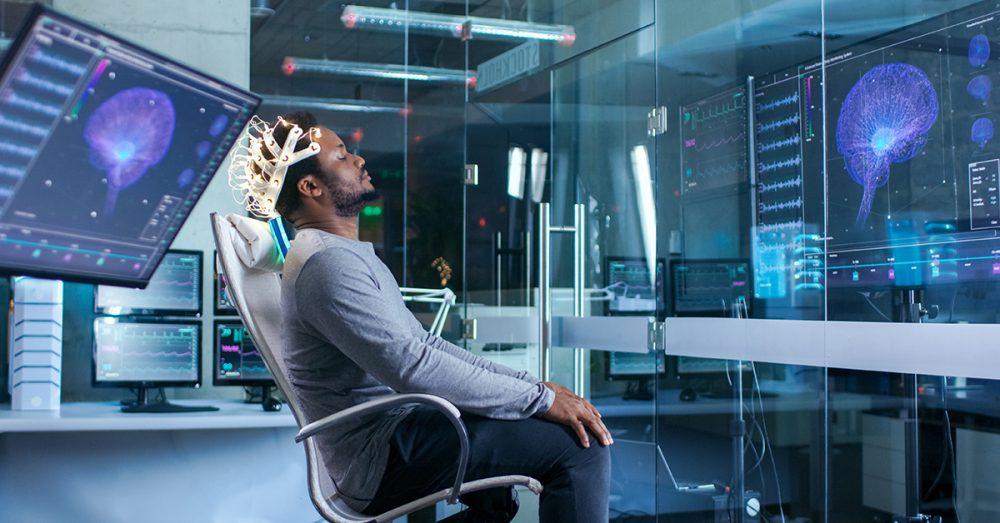
The quest to bridge the gap between human cognition and digital technology has created one of the most exciting and potentially transformative markets of the 21st century. The global Brain-Computer Interface Market is a rapidly emerging ecosystem of research institutions, medical device companies, and well-funded startups dedicated to developing technologies that can read and interpret brain signals. This market, while still in its early stages, is driven by two powerful forces: the immense medical need to restore function and communication for patients with severe neurological disorders, and the long-term, visionary goal of creating a new paradigm for human-computer interaction. Fueled by advancements in neuroscience, microelectronics, and artificial intelligence, the BCI market is attracting significant investment and talent, poised to move from the research lab to clinical and, eventually, consumer applications.
To better understand its structure, the market can be segmented by the type of BCI technology, its core components, and its primary applications. By type, the market is divided into invasive BCIs (requiring surgery), partially invasive BCIs (placed on the surface of the brain), and non-invasive BCIs (using external sensors like EEG headsets), with the non-invasive segment currently being the largest by volume. By component, the market includes hardware (the electrodes, amplifiers, and data acquisition systems) and software (the signal processing and machine learning algorithms that decode the brain signals). The primary applications today are heavily focused on the healthcare sector, including assistive devices for paralysis, communication tools for "locked-in" patients, and neuro-rehabilitation. However, emerging applications in gaming, entertainment, and human performance enhancement are a rapidly growing segment of the market.
The primary forces propelling the market's expansion are a combination of medical need and technological breakthroughs. The most significant driver is the growing prevalence of neurodegenerative diseases (like ALS), spinal cord injuries, and strokes, which create a large and underserved patient population that could benefit immensely from BCI technology. The potential to restore a person's ability to move, communicate, or interact with the world is a powerful humanitarian and commercial motivator. On the technology side, advancements in material science are leading to more biocompatible and stable neural implants. The massive progress in AI and machine learning has dramatically improved the ability to decode complex neural signals. Furthermore, the high-profile efforts of companies like Neuralink have generated immense public and investor interest, attracting a new wave of capital and talent to the field.
Despite the immense promise and recent breakthroughs, the BCI market faces formidable challenges. For invasive BCIs, the primary hurdles are the risks associated with brain surgery, the long-term biocompatibility and stability of the implants, and the need for a very high level of reliability for medical applications. The regulatory pathway for getting these devices approved by bodies like the FDA is long and incredibly rigorous. For non-invasive BCIs, the main challenge is the lower signal quality and "bandwidth," which limits the complexity of the tasks they can control. Across all types of BCI, ethical considerations are paramount, including questions about data privacy (who owns your brain data?), security (could a BCI be hacked?), and the potential for cognitive enhancement to create new forms of inequality.
Top Trending Reports:

 English
 Arabic
 French
 Spanish
 Portuguese
 Deutsch
 Turkish
 Dutch
Dutch
 Russian
 Romaian
 Portuguese (Brazil)
 Tiếng Việt