
A modern, professional e-sports event is a complex and high-production-value affair, a sophisticated fusion of live event management, broadcast technology, and online community engagement. A complete E-sports Market Solution is not just the game itself but an entire ecosystem of interconnected components designed to create a compelling experience for both the live audience and the millions of viewers watching online. This end-to-end solution is composed of several key layers: the competitive gaming infrastructure, the live event production and venue setup, the broadcast and streaming pipeline, and the online platform for audience engagement. Understanding the anatomy of this solution is essential to appreciating the immense logistical and technical complexity involved in staging a major international e-sports tournament, a process that now rivals a major traditional sporting event.
The foundation of any e-sports solution is the competitive gaming infrastructure. This is the core technology that ensures a fair and stable competition for the players. For a live event, this involves setting up a local area network (LAN) on stage that is completely isolated from the public internet to ensure zero latency and to prevent any outside interference or cheating. It includes providing the professional players with identical, high-performance gaming PCs, monitors, and peripherals (keyboards, mice) to ensure a level playing field. The solution also includes the dedicated game servers and the specialized "spectator client" software provided by the game publisher, which allows the broadcast team to view and control the in-game cameras to follow the action.
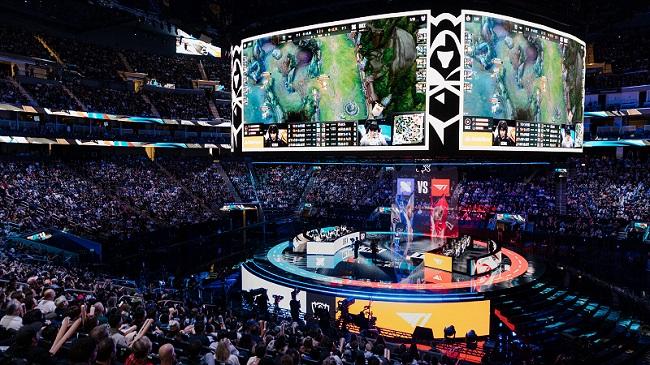
The next layer is the live event production. For a major tournament, this is a massive undertaking, often taking place in a large sports arena. This involves building a spectacular stage with large LED screens for the live audience, soundproof booths for the competing teams, and a dedicated broadcast desk for the commentators or "casters." The production solution includes a multi-camera setup to capture the players' reactions and the crowd's energy, a professional audio system, and a complex video switching and graphics overlay system, very similar to a traditional sports broadcast. The goal is to create an exciting and visually stunning in-person experience that is as compelling as any rock concert or championship sports game.
Finally, the heart of the modern e-sports solution is the broadcast and streaming pipeline and the audience engagement platform. The live video feed from the event is encoded and sent to a live streaming platform, most commonly Twitch or YouTube. These platforms provide the global distribution infrastructure to deliver the stream to millions of concurrent viewers around the world. A key part of the solution is the integration with the platform's interactive features. The most important of these is the live chat, where millions of fans can react to the game, cheer for their team, and interact with each other in real-time, creating a massive, shared global experience. The solution also often includes features like interactive polls, in-stream item drops, and other extensions that further enhance the viewer's engagement and make watching an e-sport a truly interactive and participatory event.
Other Exclusive Reports:
Asset Reliability Software Market

 Arabic
 French
 Spanish
 Portuguese
 Deutsch
 Turkish
 Dutch
Dutch
 Italiano
 Russian
 Romaian
 Portuguese (Brazil)
 Tiếng Việt