
Artificial intelligence has transformed the way we create content. From automated emails and product descriptions to research summaries and full-length blog posts, AI writing systems are now deeply integrated into digital workflows. As these tools become more powerful and accessible, questions about authenticity and originality naturally arise. This is where an AI detector becomes essential.
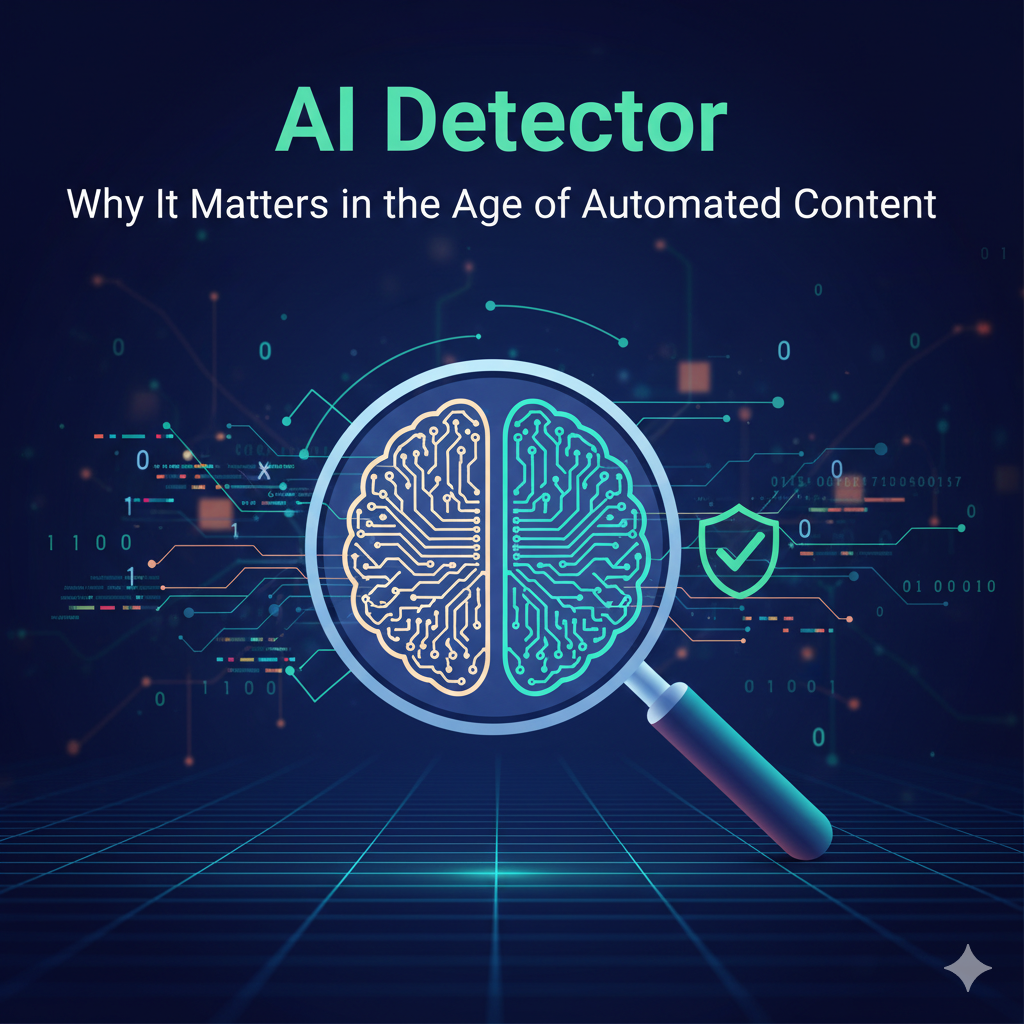
An AI detector is designed to analyze written content and determine the likelihood that it was generated by artificial intelligence. Rather than discouraging innovation, these tools promote transparency and help maintain trust in academic, professional, and online environments.
What Is an AI Detector?
An AI detector is a software-based system that evaluates text using advanced language models. Unlike plagiarism checkers, which compare content against existing sources, AI detectors focus on writing behavior and structural patterns.
Artificial intelligence generates text using probability-based predictions. This often results in consistent sentence patterns, predictable phrasing, and uniform tone. Human writing, on the other hand, tends to include irregular rhythm, stylistic variation, and subtle emotional nuance. An AI detector studies these differences to provide a probability score indicating whether the content is likely machine-generated.
Why AI Detection Matters Today
As AI writing tools become widely available, industries are adapting. Educational institutions want to preserve academic integrity. Businesses seek to protect their brand voice. Publishers aim to maintain editorial credibility. In each of these cases, AI detection provides an additional layer of quality assurance.
For example, universities may use AI detectors to better understand how students are completing assignments. Companies might use them to review outsourced content. Media organizations may rely on detection tools to ensure transparency in authorship. The objective is not to eliminate AI usage but to clarify how it is being used.
How an AI Detector Works
AI detectors rely on machine learning algorithms trained on large datasets containing both human-written and AI-generated text. These systems analyze several linguistic signals, including:
-
Sentence complexity and predictability
-
Vocabulary repetition patterns
-
Structural consistency
-
Perplexity (how surprising the word choices are)
-
Burstiness (variation in sentence length and rhythm)
After analyzing these signals, the tool generates a confidence score or percentage estimate. Instead of providing a simple yes-or-no answer, most AI detectors present probability-based insights that require interpretation.
Limitations of AI Detection Technology
Although AI detectors are helpful, they are not perfect. AI models continue to evolve rapidly, and high-quality AI-generated content can sometimes resemble human writing. Similarly, structured or formal human writing may occasionally trigger false positives.
For this reason, AI detection tools should be viewed as supportive instruments rather than final authorities. Human evaluation remains crucial when making decisions about authorship or originality.
AI Detector in Content Marketing and SEO
For digital marketers and content creators, AI detectors can be highly practical. Many professionals use AI tools to generate outlines or draft ideas, then edit and personalize the text. Running the final version through an AI detector can help ensure the content maintains a natural tone.
Search engines prioritize helpful, user-centered, and high-quality content. While they do not automatically penalize AI-generated text, they emphasize originality and value. Using an AI detector allows creators to refine their work and ensure it aligns with quality standards.
Ethical Considerations
The rise of AI detection also brings ethical questions. Transparency is key. Organizations using AI detectors should clearly communicate their policies and explain how results are interpreted.
Detection tools should not be used to unfairly accuse individuals or create unnecessary fear. Instead, they should encourage responsible AI integration and improved writing practices. When applied ethically, AI detectors strengthen digital trust rather than undermine it.
Choosing the Right AI Detector
Not all AI detection tools are created equally. Reliable AI detectors are regularly updated to reflect advancements in artificial intelligence. They provide clear explanations of their scoring system and avoid exaggerated claims of perfect accuracy.
Before selecting a tool, users should consider their specific needs. Are they reviewing academic work, business content, or marketing materials? Choosing a solution tailored to the intended purpose leads to better results.
The Future of AI Detection
As artificial intelligence continues to advance, AI detection systems will evolve alongside it. Future tools may become more context-aware, analyzing writing intent, creativity, and adaptability rather than relying solely on statistical patterns.
AI detection is likely to become a standard component of digital literacy. Just as plagiarism detection became common in education and publishing, AI detection may soon be a routine step in content review processes.
Final Thoughts
An AI detector plays an important role in maintaining transparency in today’s content-driven world. While it cannot guarantee absolute accuracy, it offers valuable insight into how text is produced. By combining AI detection with human judgment, organizations and individuals can strike a healthy balance between innovation and authenticity.
As technology continues to shape communication, tools like the AI detector will remain essential in protecting trust, originality, and credibility across digital platforms.

 English
 Arabic
 French
 Spanish
 Portuguese
 Deutsch
 Dutch
Dutch
 Italiano
 Russian
 Romaian
 Portuguese (Brazil)
 Tiếng Việt