The procedure itself takes under 75 minutes. The recovery is what most patients underestimate. Not because it is difficult — thread lift in Dubai has one of the most manageable recovery profiles of any facial rejuvenation procedure. But because patients who walk in expecting zero downtime walk out surprised by the swelling, the tightness, and the pulling sensation that greets them on day two.
Setting expectations correctly before the procedure is what separates a smooth recovery from an anxious one. This guide covers every stage of thread lift recovery in Dubai — what happens, why it happens, what is normal, and what warrants a call to your clinic.
Why Recovery Happens at All
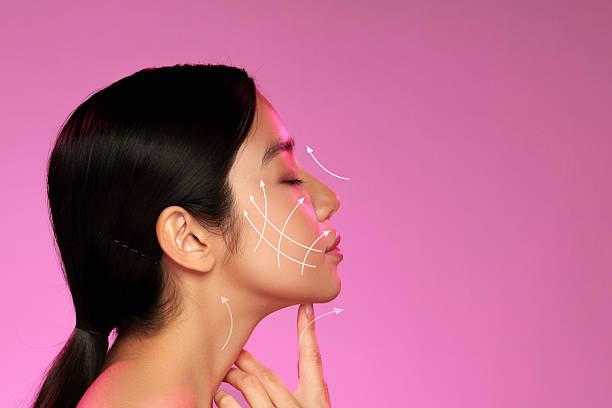
Thread lift in Dubai works by placing dissolvable sutures beneath the skin and using them to physically reposition descended facial tissue. The body's response to this is predictable and consistent: inflammation. Not harmful inflammation, but the controlled biological response that drives healing, tissue anchoring, and eventually collagen production.
Every symptom in the early recovery window — swelling, bruising, tightness, tenderness — is a direct expression of this process. Understanding that these sensations are the mechanism of recovery, not evidence that something has gone wrong, is the single most important shift in mindset a patient can make before their procedure.
The First 24 Hours After Thread Lift
The immediate post-procedure period is typically the most comfortable part of recovery. Local anaesthetic remains partially active for several hours after the procedure ends, which means most patients leave the clinic feeling only mild tightness and pressure — not significant discomfort.
Within the first two to four hours at home, as the anaesthetic fully wears off, sensations become more noticeable. This is the window in which patients should plan to be at home, rested, and not attending social or professional commitments.
What patients typically experience in the first 24 hours:
- A firm tightness across the treated zones, most noticeable when smiling or talking
- Tenderness at the entry points when touched, which are small and may resemble minor insect bites in appearance
- The beginning of swelling, which tends to feel more pronounced than it looks at this stage
- Occasional brief sharp sensations as the anaesthetic fully clears — these are transient and not a sign of complication
- A general sense of heaviness or fullness in the mid-face if cheeks were treated
Sleep is important on night one. Patients should sleep flat on their back with their head slightly elevated using an extra pillow. This position reduces the overnight fluid accumulation that causes pronounced morning swelling on day two. Travelling to sleep this way can feel unfamiliar — but it makes a measurable difference to how day two begins.
Day Two and Three: Peak Swelling
Day two is consistently the most challenging day of thread lift recovery in Dubai. Overnight fluid pooling combines with ongoing inflammatory activity to produce the most visible swelling of the entire recovery period. Patients who were not warned about this frequently contact their clinic in alarm — and are almost always reassured that what they are experiencing is entirely normal.
Swelling on day two typically affects:
- The cheeks and mid-face most prominently if these zones were treated
- The area around the entry points, which may feel firm and slightly raised
- The jowl region, which can appear temporarily fuller before the lift settles
Bruising, if present, is usually most visible on day two and three. It appears at entry points and may spread slightly into the surrounding skin. The distribution and intensity of bruising varies considerably between patients — skin type, vascularity, and pre-treatment preparation all influence it. Patients with fair skin tend to show bruising more visibly but it does not indicate a more difficult recovery.
The pulling sensation when moving the face — smiling, speaking, chewing — is particularly noticeable on days two and three. This is the threads being felt as they anchor into surrounding tissue. It is an unusual sensation but not a painful one for most patients. Soft foods and minimal wide mouth opening are strongly advised during this window.
Managing days two and three:
- Paracetamol for discomfort, taken as directed
- Cold compresses applied gently over the swollen areas for 10 to 15 minutes at a time, never directly on the skin
- Head elevation maintained when resting or sleeping
- No touching, pressing, or massaging the treated areas under any circumstances
- Staying well hydrated to support the body's natural healing response
Days Four to Seven: The Settling Phase
From day four onward, recovery visibly accelerates. Swelling begins reducing in a way patients can see and feel each morning. The firm tightness softens. Bruising starts yellowing and fading. The pulling sensation when moving the face becomes less noticeable with each passing day.
By day five or six, most patients find they are socially presentable in low-key settings. The lift is beginning to read as natural rather than operated. The face has settled enough that the result becomes visible underneath the resolving swelling.
This is also the stage at which many patients experience their first moment of genuine satisfaction. The anxiety of days two and three gives way to a clearer view of what has actually been achieved. The jawline is sharper. The cheeks sit higher. The heaviness that was there before the procedure is gone.
What is still normal in days four to seven:
- Mild residual swelling, particularly on waking in the morning
- Fading bruising that may still require light concealer for professional settings
- Intermittent tightness when the face is very animated
- Occasional skin sensitivity at entry point locations
- Mild asymmetry between the two sides, which is normal as swelling resolves unevenly
Minor asymmetry at this stage almost always resolves on its own as the remaining swelling clears. Patients should not assess final symmetry until at least two weeks post-procedure.
Week Two: Returning to Normal Life
By the end of week one and into week two, the majority of patients have returned to their full professional and social schedule. The physical evidence of the procedure — swelling, bruising, visible entry points — has resolved sufficiently that most people are comfortable in all but the most high-definition social settings.
The lift feels settled. The tightness has become a background sensation rather than a foreground one. Many patients report that they stop being conscious of the threads by day ten to twelve.
What changes in week two:
- Full return to professional life, including high-visibility roles and social commitments
- Makeup can be applied carefully around entry points from approximately day five, and fully from day seven
- Gentle facial skincare — cleanser, moisturiser, SPF — can resume but active ingredients remain restricted
- Sleep position restrictions can begin relaxing from day ten onward, though back sleeping remains preferred
What remains restricted through week two:
- Vigorous physical exercise, particularly cardiovascular activity that raises facial temperature significantly
- Facial massage of any kind — professional or self-administered
- Dental procedures requiring extended wide mouth opening
- Saunas, steam rooms, and hot yoga
- Retinol, AHA, and BHA-based skincare directly over treated areas
These restrictions are not arbitrary. The thread anchoring process is still completing during this window. Physical disruption — whether from massage, heat, or vigorous movement — can affect how threads settle and anchor into surrounding tissue, which directly influences the quality and longevity of the lift.
Weeks Three and Four: Collagen Begins
By the third and fourth weeks, the visible recovery is effectively complete for most patients. What begins now is invisible — the biological phase that determines how good the long-term result will be.
PLLA threads trigger a controlled inflammatory response in the tissue immediately surrounding them. This response activates fibroblasts — the cells responsible for collagen synthesis. New collagen fibres begin forming along the thread pathways, gradually building a structural scaffold that supports the lifted tissue from within.
Patients at this stage often report that their skin feels different even in areas beyond the directly lifted zones. Firmer. More consistent in tone. Less prone to the small surface variations that characterise thinning or ageing skin. This is the collagen response beginning — and it will continue building for the next four to six months.
Activity restrictions lift almost entirely by week four. The exception is aggressive facial treatments such as deep chemical peels, fractional laser, and radiofrequency — these are typically deferred to six to eight weeks post-procedure to avoid disrupting the collagen synthesis process while it is most active.
Month Two Through Six: When Results Peak
When Do Thread Lift Results Look Their Best in Dubai?
The best composite result from thread lift in Dubai occurs between months four and six. At this stage the mechanical lift has fully settled, the swelling has long resolved, and the collagen response is at or near its peak. Skin quality, firmness, and the structural lift combine into the outcome that most before-and-after documentation captures.
Patients who reassess their result at six months consistently report greater satisfaction than those who judge it at six weeks. The biological benefit that builds gradually is substantial — and only fully visible when it reaches its peak.
This is also the stage at which many patients consider whether any complementary treatment would further enhance what thread lift has achieved. A small amount of hyaluronic acid filler to restore volume in zones that remain slightly hollowed. Botox to relax any downward-pulling muscle activity. Skin quality treatments to build on the improved canvas that collagen induction has created.
Month Twelve to Eighteen: Maintaining the Result
Thread lift results in Dubai typically last 12 to 18 months for most patients, with some individuals maintaining meaningful improvement at 24 months. The collagen scaffold that builds during the first six months continues providing structural support even after the thread itself has fully dissolved.
Signs that a maintenance session may be appropriate:
- The patient notices gradual softening of the jawline definition achieved
- The mid-face begins settling slightly from its lifted position
- A new area of descent has developed that was not addressed in the original session
Maintenance thread lift sessions are typically simpler than the original procedure. Less correction is needed because the existing collagen scaffolding provides a partial foundation. Patients who have regular skin quality treatments — medical-grade skincare, SPF discipline, hydration treatments — tend to maintain their thread lift results longest.
What Warrants a Call to Your Clinic
Most thread lift recoveries are uneventful. But patients should contact their clinic without delay if they experience:
- Increasing pain or swelling after day three, rather than decreasing
- Signs of infection — redness spreading beyond the entry point, warmth, discharge, or fever
- A visible cord or ridge beneath the skin that does not resolve after two weeks
- Significant asymmetry that remains unchanged at two weeks
- A thread end that becomes visible through the skin surface
None of these are common. But responding to them promptly rather than waiting is always the right decision.
Patient Perspective: Real Recovery Experiences
"Nobody warned me about day two. I woke up, looked in the mirror, and nearly called the clinic in a panic. My consultant had told me swelling was normal but seeing it was different from hearing about it. By day six I was fine — and by week three I was genuinely happy. I just wish I had been told more specifically what day two would look like." — Noura, 49, Dubai Hills
"My recovery was quieter than I expected after day three. I was back at work on day four with a little concealer and nobody asked a single question. The tightness was strange for about ten days but not painful — just a constant reminder that something was happening under the skin." — Dina, 43, Mirdif
Why Choose Tajmeels Clinic for Thread Lift in Dubai?
Tajmeels Clinic provides every thread lift patient with a structured recovery plan, written post-procedure instructions, and clear guidance on what is normal at each stage of healing. Follow-up appointments at one to two weeks and three months ensure that recovery is monitored by the same specialist who performed the procedure, allowing for prompt identification and management of anything outside the expected trajectory.
FAQ: Thread Lift Recovery in Dubai
Is it normal to feel the thread under my skin?
In the first two to three weeks, some patients can feel a subtle cord-like sensation when pressing the skin over the thread pathway. This is normal and resolves as swelling reduces and the surrounding tissue settles around the thread. If the sensation is painful or the thread becomes visible through the skin surface, contact your clinic.
When can I exercise after thread lift in Dubai?
Light walking can resume from day three or four. More vigorous exercise, including running, strength training, and high-intensity activities, is deferred until after the two-week mark. Exercise that significantly raises facial temperature or causes heavy sweating is the primary concern during the restriction window.
Can I wear makeup after thread lift?
Makeup should be avoided on the day of the procedure and ideally for the first 48 hours. From day five onward, light makeup can be applied carefully with clean brushes or sponges, avoiding direct pressure on entry point locations. Full makeup application can typically resume by day seven.
Will the swelling affect how I assess my result?
Yes. Swelling in the first two weeks can make the result look overcorrected, undercorrected, or asymmetrical. Patients should not form a final view of their result until at least two weeks post-procedure, and ideally wait until the six-week mark for a meaningful assessment.
What skincare can I use during recovery?
A gentle cleanser, fragrance-free moisturiser, and SPF30 or higher are appropriate from day two onward. Active ingredients including retinol, vitamin C in high concentrations, AHAs, and BHAs should be avoided over treated areas for at least three weeks. Your practitioner will advise based on your specific skincare routine.
Does the recovery differ for different treatment areas?
Yes. Cheek and mid-face treatment tends to produce the most visible swelling. Brow and neck zones typically recover faster with less pronounced bruising. Patients who have multiple zones treated in one session should expect a slightly longer settling period than those who have a single zone addressed.

 English
 Arabic
 French
 Spanish
 Portuguese
 Turkish
 Dutch
Dutch
 Italiano
 Russian
 Romaian
 Portuguese (Brazil)
 Tiếng Việt