A critical but often overlooked aspect of Gynaecomastia surgery in Dubai is how the body manages internal fluids during the initial healing phase. When glandular tissue is removed or ultrasound-assisted liposuction is performed, a small space is temporarily created between the skin and the pectoral muscle. The body’s natural response is to fill this space with "serous fluid."
At Tajmeels Clinic, our surgical protocols are designed to minimize fluid buildup, ensuring the skin adheres quickly and smoothly to the new masculine contours of your chest.
What is a Seroma and How is it Prevented?
A seroma is a localized collection of fluid that can occur under the skin after surgery. While not usually dangerous, it can cause discomfort and temporary unevenness in the chest profile.
To prevent this, we employ several advanced strategies:
-
Tumescent Technique: We use a specialized saline solution during the procedure that constricts blood vessels and minimizes the initial inflammatory fluid response.
-
Advanced Compression: The use of compression garment technology is the most effective way to prevent fluid from pooling. By keeping the skin pressed firmly against the muscle, the "dead space" is eliminated, forcing the body to reabsorb any minor fluid naturally.
-
Activity Restriction: Avoiding sudden movements or heavy lifting in the first 7–10 days prevents "shearing" forces that can trigger extra fluid production.
Will I Need Surgical Drains?
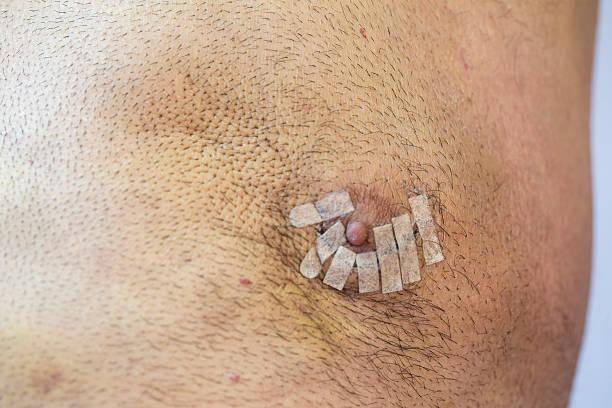
One of the most frequent questions we receive at Tajmeels Clinic is whether surgical drains are necessary. Drains are small, thin tubes placed during surgery to exit the skin and collect excess fluid in a small bulb.
-
For Grade 1 and 2: Most patients in these categories do not require drains. Because the tissue removal is less extensive, the compression vest is usually sufficient to manage fluid.
-
For Grade 3 and 4: In cases involving significant tissue excision or skin lifting, drains may be used for 24 to 48 hours. This ensures that the larger "dead space" remains dry, allowing the skin to "tack down" properly.
-
Drain-Free Techniques: Our surgeons prioritize meticulous "internal suturing" and VASER technology, which often allows even moderate cases to be completed without the need for external drains.
Recognizing and Treating Fluid Buildup
It is normal to have some minor, generalized swelling across the chest. However, if a localized pocket of fluid (a seroma) does develop, it is easily managed at Tajmeels Clinic.
-
The "Sloshing" Sensation: Patients may feel a slight "wave" or "slosh" under the skin if fluid has collected.
-
Simple Aspiration: If a seroma is detected during a follow-up visit, it can be quickly and painlessly drained in the clinic using a very fine needle. This often provides instant relief and allows the skin to continue its retraction process.
-
Adjusting Compression: If fluid persists, we may add specialized foam padding (Lipofoam) under your vest to provide targeted pressure to the area.
The Role of Nutrition in Fluid Management
What you eat in the days following your male breast reduction in Dubai can impact your swelling levels.
-
Low Sodium: High salt intake causes the body to retain water, which can increase internal pressure and fluid collection.
-
High Protein: Protein is essential for tissue repair and maintaining the osmotic pressure that keeps fluid inside your blood vessels and out of the surgical space.
-
Hydration: Staying well-hydrated helps your kidneys flush out the by-products of surgery and anesthesia.
Why Choose Tajmeels Clinic?
At Tajmeels Clinic, we believe that a smooth recovery is just as important as the surgery itself. Our team provides close post-operative monitoring, with scheduled check-ups in the first week to assess fluid levels and garment fit. By combining advanced Gynaecomastia surgery in Dubai techniques with proactive fluid management, we ensure your chest heals flat, firm, and without complications. Contact Tajmeels Clinic today to discuss your personalized recovery plan.
FAQ: Fluid and Swelling
Does it hurt to have a seroma drained?
The area is usually still somewhat numb from surgery, and the skin is quite thin, so most patients feel only a tiny pinch, similar to a routine blood test.
How do I know if the swelling is "normal"?
Normal swelling is usually symmetrical and firm. If you notice a "soft," bulging pocket on only one side that feels like a water balloon, it may be a seroma.
Can I sleep on my side if I have drains?
No. You must sleep on your back in an elevated position to ensure the drains work effectively and to prevent putting pressure on the healing tissues.
Will a seroma affect my final result?
As long as it is addressed promptly by your surgeon at Tajmeels Clinic, a seroma will not impact your long-term aesthetic outcome.
How long do the "drain holes" take to heal?
Once the drains are removed, the tiny entry points usually close up on their own within 24 to 48 hours and leave almost no visible scar.

 English
 Arabic
 French
 Spanish
 Portuguese
 Deutsch
 Turkish
 Dutch
Dutch
 Russian
 Romaian
 Portuguese (Brazil)
 Tiếng Việt